Being owners of expensive clothes or having a good taste in fashion doesn’t amount to anything if we don’t know how to look after them or store them properly. So what’s the point in investing in good clothes when you won’t be taking care of them? Well, you might say what this hullabaloo about clothes is – frankly, good clothes speak volumes about your personality. So if you want to be seen as confident and in charge, your clothes need to be near-perfect as well. Good clothes, i.e. well-washed, ironed properly and matched for the occasion, speak a lot about your mood too.
This is a serious phenomenon and is known as Enclothed Cognition. Simply put, it ‘involves the co-occurrence of two independent factors – clothes have a symbolic meaning and influence the physical experience of the wearer. For example, if a person wears well-ironed, crisp formals for a meeting, they feel in charge of the situation. This is because their confidence is at its peak. Similarly, brides go all out and dress in their finery to feel like a dream, and the most beautiful girl at the event. In short, clothes maketh the man or the woman!
So where do we go wrong? When we buy clothes, we hardly pay attention to how it is to be maintained. We think that a regular tumble dry in the washing machine and a quick iron will do the trick. To add to our woes, we cut out the labels in our clothes that have washing instructions. But every cloth we buy – a dress, a jean pant or a formal shirt, needs a different kind of TLC.
Wondering how to make this happen? It is straightforward really. Here are some easy and efficient tips to maintain your clothes:
#1 Wash & Iron, Steam Press Care – do it at home or seek professional care
This must be done like clock-work as it is question of hygiene. This also increases the shelf life of your clothes. Plus, it is a great way to rotate the many clothes you have and wear them out equally. For example, georgette dresses in bright colors have to be washed separately and preferably hand-washed in mild detergent. Cotton shirts can be starched.
Jeans need not be washed too often or ironed at all. Ironing of clothes needs to be done with much care as well. There are different temperature settings on your iron and they are there for a reason! We need to pay attention to these details else, we lose money. For example, If we send our expensive clothes to the ‘Dhobi’ without any instructions and then realise that it has been ruined because he has burnt a hole in them, the mistake is ours entirely!
Different fabrics call for different heat temperatures. Plus, each garment must be ironed properly along with its lines, else there will be burnt marks all over, rendering the outfit useless.
Another important point to remember is that not all clothes can be washed and ironed at home. This is true for silks and other heavy-duty clothes with embroidery or work on them. Silks should be laundered or roll-pressed, depending on its next requirement. They need to be stored in soft cotton cloth bags or in muslin with naphthalene balls. Clothes with heavy embroidery should be turned inside out so that they do not get tangled with others. winter clothes need to be drip-dried in mild detergents and stored separately. Distinctions can be made based on colors, make, and material and so on…
#2 Invest in the right hangers
Well, hangers are hangers, right? One for all? NO. It is perhaps the most overlooked aspect! Not all hangers are the same. For skirts and blouses, we need hangers with hooks or clips on them. For blazers or heavy clothes, sturdy wooden hangers are needed. For shirts, the hangers will have divots or rubber tipped ends, especially in case of tank tops or silky fabrics so that they don’t slide off. Similarly, for pants, the hangers need to have trouser bars so that pants don’t fall off.
#3 Wardrobe Arrangement
Did you know wardrobe arrangement is a full time job and a highly paid one at that? Yes, for the rich and famous, there are professionals available who arrange their wardrobes, shoes, bags and other accessories. But for other mere mortals, we have to do this on our own!
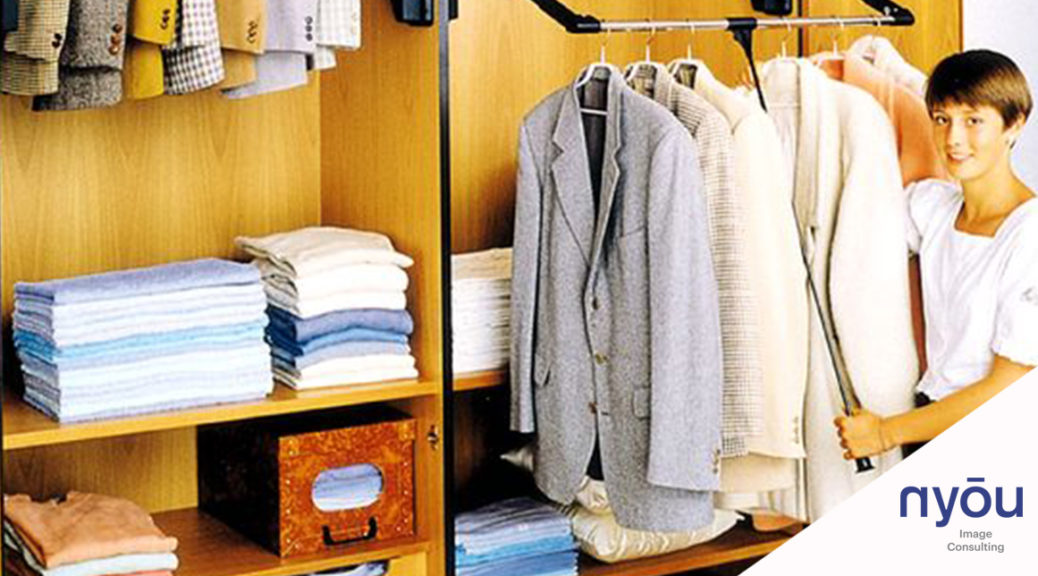
Wardrobe arrangement can be done as per seasons. By doing so, it leaves us with enough space to keep clothes properly that are currently in use. For example, at the beginning of summer, put away all your winter sweaters, cardigans and coats. Similarly, you can arrange your wardrobe for spring and autumn too. This means all your clothes get a chance and you don’t have to struggle to find anything.
Similarly, they can be clustered or categorized as per work, casual, events or party clothes. This helps to maintain a distinction and one has clothes for all occasions.
Storing clothes doesn’t mean merely packing them off in a suitcase or boxing them. It requires patience and strategy. Hang the clothes in sturdy hangers that are required daily. Different clothes can be placed in different compartments in the cupboard.
#4 Retire Old Garments – Donate it or simply discard them
Old garments that have served their purpose, i.e. are not wearable anymore or the ones that don’t fit should be retired or discarded. They can be donated to institutions or simply handed to the househelps who can use them. In case of undergarments, it is best they are discarded as they can cause hygiene issues. Underwears should be cut up and chucked with the garbage. In case of brassieres, they can be given to the help as well. However, an important point one needs to remember is that undergarments should be changed every three to four months. The ones in use should be washed separately from the clothes, preferably hand washed in mild detergent. If they are stained or soiled, they should soaked in soapy water before they are rinsed.